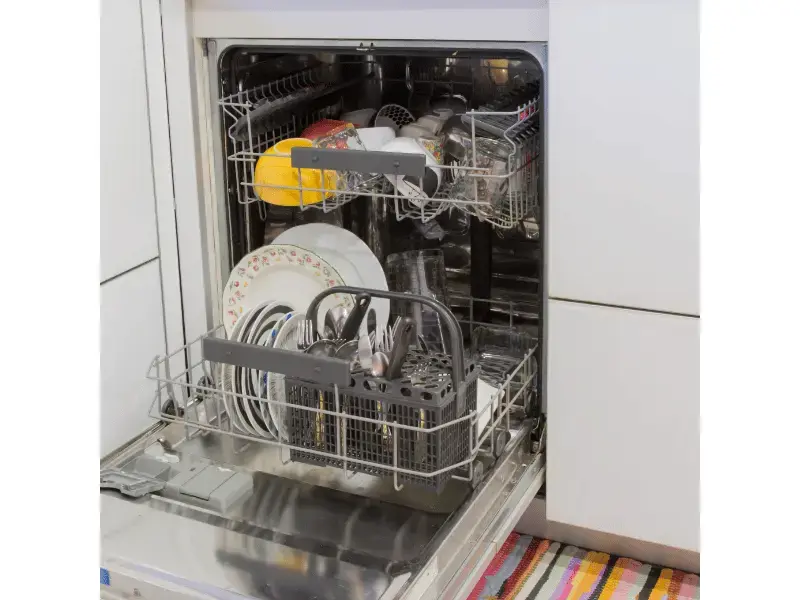
Quick Answer: To clean hard water deposits from the dishwasher easily, remove and rinse the dishwasher filter, wipe the tub, then run a vinegar rinse using white vinegar on the bottom rack followed by a short baking soda cycle to lift limescale and mineral residue. Next, clean spray arms to restore spray coverage, check the rinse aid dispenser, and confirm your dishwasher settings use the hottest setting with hot water (120°F) for better drying. This clears most hard water stains, hard water spots, and chalky deposits that cause a foggy appearance and dullness on glassware. If spotting returns quickly, test for hard water minerals like calcium and magnesium and consider long-term water treatment if silica is involved.
Why Hard Water Deposits Happen in Dishwashers
Hard water is water with high mineral content. When a wash cycle ends and water evaporates, dissolved minerals turn into mineral deposits that stick to dishes and internal parts. Over time, that buildup becomes scale buildup (often called limescale) and can trigger clogs, poor drainage, and even appliance malfunctions.
If you’re seeing white spots, white residue, or a cloudy film, that’s usually hard water minerals, most commonly calcium and magnesium drying on the surface. If your glassware looks permanently hazy, you may be dealing with glass etching (more on that below).
A lot of homeowners first notice the problem as white spots on dishes after dishwasher cycles then realize it’s a whole-home water issue, not just a detergent issue.
Quick Self-Check Before You Start (So You Don’t Waste Time)
If you want faster results, confirm what you’re dealing with first. The cleaning approach is different for removable water spots vs permanent etching.
Use this internal guide if you’re also seeing signs you need a water filter elsewhere in the home (spots on fixtures, scale around faucets, soap that won’t lather, etc.).
Water Spots vs Etching (Fast Test)
- If the haze wipes away with a vinegar-damp cloth, it’s likely water spots or hard water stains.
- If the surface feels rough and never clears, it may be etched from glass etching, sometimes worsened by detergent and very hot cycles.
- If the haze looks rainbow-ish or milky and resists vinegar, silica may be involved.
What You See vs What It Usually Means
Symptom | Likely Cause | Where it Shows Up | Best First Move |
white spots on glass | mineral residue from hard water | glassware, plates | vinegar wipe + rinse aid check |
white residue on dishes | heavy mineral deposits | plates, silverware | vinegar rinse + filter clean |
cloudy film / foggy appearance | scale buildup or early etching | glasses | vinegar test; adjust detergent |
dullness on glass | buildup or etching | glasses | deep clean + cycle settings |
Repeating buildup | high hard water or silica | whole dishwasher | test water; long-term treatment |
Step-by-Step Deep Clean That Works (No Fancy Tools)
This is the simplest workflow that covers the usual trouble zones (filter, spray arms, tub, and chemistry).
1) Clean the Dishwasher Filter (Don’t Skip This)
Pull out the dishwasher filter and rinse it under warm water. If it’s greasy or gritty, soak it for 10 minutes in warm water with a little dish soap, then scrub gently with a soft sponge.
Tip: If your filter is packed with mineral grit, you’ll keep getting spots because dirty water recirculates. Clean filter = cleaner rinse.
2) Unclog and Rinse the Spray Arms for Better Coverage
Remove the spray arms if your model allows. Rinse them and clear holes with a toothbrush. This restores spray coverage, which is crucial because minerals cling more when water doesn’t rinse evenly.
Quick fix: If you can’t remove spray arms, rotate them by hand and use a toothbrush on visible jets then run a short hot cycle.
3) Run a Vinegar Rinse to Dissolve Limescale and Deposits
Place a dishwasher-safe bowl filled with white vinegar on the bottom rack and run an empty cycle. This vinegar rinse helps dissolve limescale and loosen hard water stains in dishwasher interiors.
How much vinegar? 1–2 cups is usually enough for a standard tub.
4) Follow with Baking Soda to Lift Odor + Remaining Film
After the vinegar cycle, sprinkle 1 cup of baking soda across the tub floor and run a short hot cycle. This helps brighten the interior and knock loose stubborn residue.
5) Wipe the Interior and Problem Edges
After cycles finish, wipe the door edges, gasket area, and corners (where mineral sludge hides) using a non-abrasive cloth dampened with warm water. If needed, use a little vinegar on the cloth for stubborn spots.
Dishwasher Settings That Reduce Spots Immediately
Even a clean machine can leave spots if the rinse/dry conditions are wrong.
Use the hottest setting you can safely run and make sure your home’s supply is delivering hot water (120°F) at the start of the cycle. Run the sink hot for 30–60 seconds before starting so the dishwasher fills hot.
Tip: Better heat improves drying. Better drying means fewer minerals are left behind as droplets evaporate.
This is one of the fastest ways to reduce dishwasher water spots without buying anything new.
Small Adjustments That Prevent Hard Water Spots
- Refill the rinse aid dispenser consistently (it helps water sheet off instead of bead up).
- Don’t overload: crowded dishes block rinsing and increase spotting.
- Angle cups downward so water drains instead of pooling.
- Use the right dose in the detergent dispenser too much can worsen haze.
- Clean your filter monthly to prevent recirculating grit and mineral deposits.
When Detergent Makes It Worse (And How to Fix It Fast)
Not all detergents behave the same in hard water. If you’re seeing dishwasher water stains even after cleaning, the detergent may be leaving residue or reacting with minerals.
If you’ve ever searched “white spots on dishes in the dishwasher,” this is often the missing piece: detergents need the right chemistry, dose, and rinse conditions to prevent spotting.
If you want the cleanest results without guessing, consult reliable water filtration technicians to confirm whether you’re fighting hardness alone or hardness plus silica.
The Fastest “1-Hour Reset” Routine
- Remove and rinse the dishwasher filter (10 minutes).
- Clean spray arms jets with a toothbrush (10 minutes).
- Run an empty hot cycle with white vinegar (30–45 minutes).
- Sprinkle baking soda, run a short hot cycle (10–15 minutes).
- Wipe edges with a non-abrasive cloth (5 minutes).
This routine is the simplest answer to how to clean hard water deposits from dishwasher when you need visible improvement quickly.
The Overlooked Mineral: Silica (Why Vinegar Sometimes Fails)
Most deposits are from calcium and magnesium. But silica behaves differently. It can create a haze that looks like spots at first, then turns into a stubborn film that doesn’t respond to normal acids. Over time it can contribute to irreversible etching-like damage.
If vinegar doesn’t touch the haze and the glass stays rough and cloudy, you may be seeing true etching or silica-related damage. In that case, cleaning can improve the dishwasher interior, but damaged glass may not return to “new.”
For recurring cases, trained whole house filtration system technicians can test and recommend solutions that address the mineral profile causing the haze, not just the symptoms.
Cleaning vs Prevention (Both Matter for Long-Term Results)
Cleaning removes existing mineral residue and hard water stains. Prevention stops new buildup from forming. You’ll get the best outcome when you do both.
What Prevention Actually Changes
- Less scale buildup inside heating elements and waterways
- Fewer repeat hard water spots on glassware
- Lower risk of clogs in spray arms and filters
- Better drying and less streaking
This is why learning how to clean hard water deposits from the dishwasher is step one but stopping the cause is step two.
Prevention Options (From Simple to Permanent)
- Keep rinse aid topped off and run hot start water before cycles
- Deep clean monthly to prevent limescale layers from hardening
- Consider water hardness testing if spots return within 1–2 weeks
- If hardness is high, consider softening/filtration for the entire home
Maintenance Schedule for a Spot-Free Dishwasher
Task | Frequency | Why it Helps |
Rinse the dishwasher filter | Monthly | Stops grit recirculation and residue |
Clean spray arms | Every 2–3 months | Restores spray coverage |
Vinegar cycle | Monthly (hard water) | Dissolves limescale and deposits |
Baking soda cycle | Monthly | Lifts film and freshens tub |
Check rinse aid + detergent dosing | Every load | Prevents spotting and haze |
Troubleshooting If Spots Keep Coming Back
- Confirm its removable spots, not glass etching or silica haze.
- Ensure dishwasher settings use enough heat and drying time.
- Verify the rinse aid dispenser is working and filled.
- Reduce overload and improve draining angles in the racks.
- Re-check the detergent dispenser dose and detergent type.
- If you still get hard water stains in the dishwasher, test the hardness and mineral content.
If you’re in the Cypress/Houston area and the issue keeps returning despite cleaning, a local plumbing company can help test hardness and confirm whether broader water treatment is the right move.
Call Go Green Plumbing to Stop Hard Water at the Source
If you’re tired of repeating the same cleaning cycle and want a long-term solution, Go Green Plumbing can help you identify what’s in your water and prevent recurring deposits.
Go Green Plumbing
Call: 2819606576
FAQs About Dishwasher Water Spots
Why do I get white spots even after cleaning?
Most white spots are minerals drying on surfaces. If they return quickly, your water may be hard or your rinse/dry setup needs adjusting.
Can vinegar remove hard water deposits from a dishwasher?
Yes white vinegar helps dissolve many deposits (especially calcium-based). If the haze doesn’t change, silica or etching may be involved.
How often should I deep clean for hard water?
For hard water, monthly vinegar + baking soda cleaning is a strong baseline, plus monthly filter rinses.
What causes cloudy film on glasses?
A cloudy film can be mineral residue or permanent etching. Do the vinegar wipe test: if it clears, it’s residue; if not, it may be etching.
Will cleaning fix etched glasses?
No glass etching is permanent. Cleaning prevents it from getting worse but can’t restore damaged glass.